# Frames on the Road: How a Week, a Bridge, a Coastline and a Camera Teach Us to Travel Slowly
There’s a simple alchemy to travel: a few decisive images can summon entire weeks of weather, conversation, food scraps on a table, and the hum of a rental car on a coastal ribbon of asphalt. But behind every striking photograph is a decision — where to stop, how long to stay, who to listen to, and how to share what you’ve seen without flattening it into clickbait. For wandering millennials and Gen‑X travelers who prefer memory over checklist, here’s a guide to turning short glimpses into meaningful journeys and shareable stories.
## A rooftop at dusk, and why pictures still lead the way
You arrive at a terrace just as the light thins. The air tastes of sea salt and warm bread; dogs bark across alleys like punctuation. One photograph — a rooftop with laundry flapping and a cathedral spire sliding into mauve — can hold all of that if you look for the small things: a woman lighting a cigarette behind a window, the rhythm of chimney stacks, the smear of oil on a market stall. Images are shorthand, but the best ones imply motion and context. They make the viewer hear, smell, and move through a place.
That implication is currency both on the road and online. A carefully framed shot resists the scroll-and-forget economy by inviting a question rather than offering a pre-packaged answer. It asks: who is that person? What was being said? Where does that stairway lead? Those open-ended details are what make a memory keep its weight.
## Own a week, even if you only have one
A “view for a week” isn’t literal for most of us. It’s a mindset: plant your feet somewhere long enough to notice patterns. Rent a small apartment on a side street instead of a flashy hotel on the main drag. Buy bread from the same boulangerie each morning. Track the market’s rhythm — a Saturday fishmonger out by the quay, a Tuesday when the spice vendors surface — and you’ll start to see the place organize itself.
Practical moves: choose a base and explore radially, walk before you drive, and sit in the square and listen. Learn a few local words — “bom dia”/”boa tarde” in Portugal, “teşekkür ederim” in Turkey, “merci” in France — not as performative polish but as an offering of respect. Those gestures open doors. Over time, a frame becomes more than a postcard; it becomes the record of becoming comfortable in a place.
## Driving the Côte d’Azur: the coast rewards patience
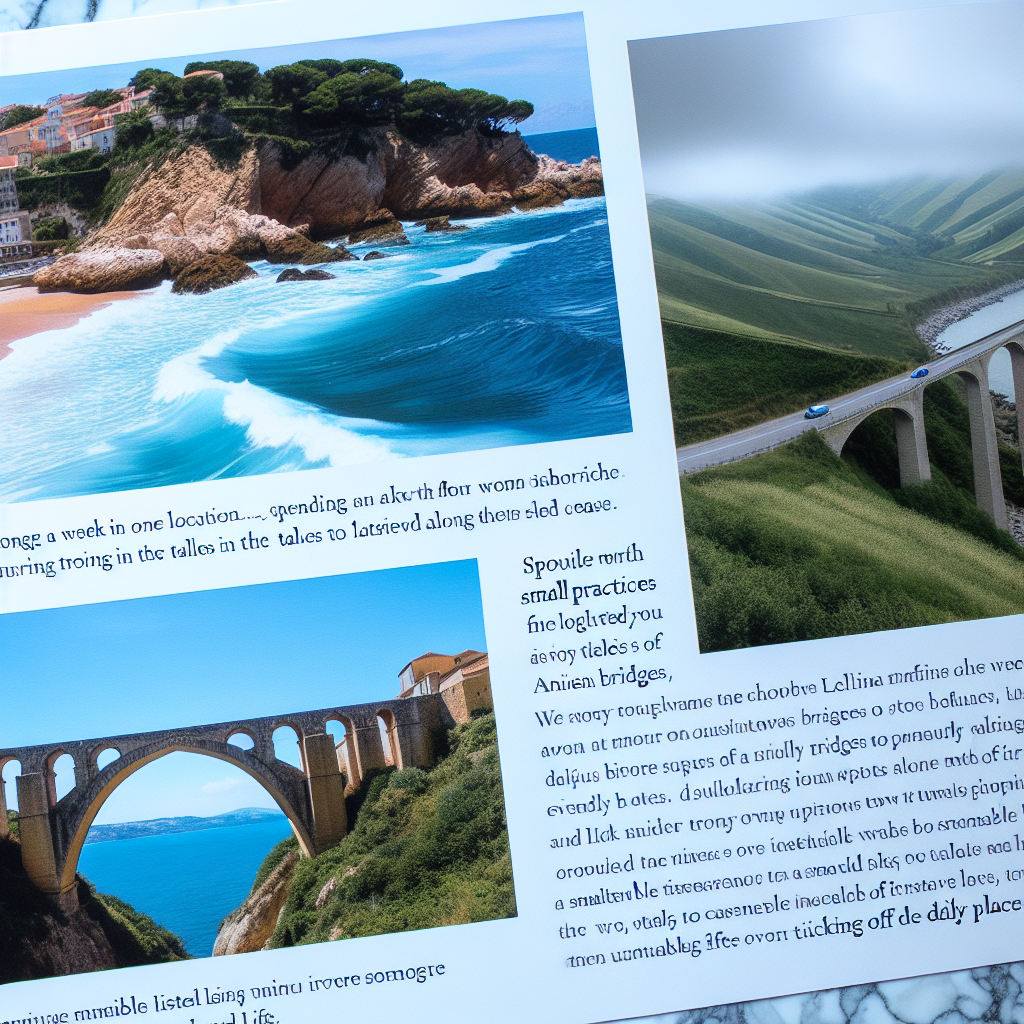
The French Riviera arrives in most imaginations as sun-blurred glamour. Drive it slowly and another story reveals itself: terraced vineyards clinging like green embroidery to slopes, villages with stairways that tumble down to pebble coves, late-afternoon markets where older locals haggle over olives with the same patience as their grandchildren scrolling their phones.
A car gives you the freedom to stop where the road asks you to. Pull into a layby at a ribbon of wild thyme and stare; walk down a lane that looks as if the sun paved it. Avoid July and August; late spring or early autumn yields kinder light and thinner crowds. Practical camera tip: shoot during golden hour — the cliffs take on a honeyed glow that camera sensors love.
Travel ethically here: buy from the neighborhood bakery (la boulangerie) rather than a supermarket chain; ask permission before photographing people; learn names of local dishes (socca, pissaladière) and order them at the source. You’ll get warmer smiles — and images with honest backstories.
## Oluk Köprü and the pull of old crossings
Stone bridges carry the smell of rain and centuries. Oluk Köprü — literally a ‘pipe’ or narrow-arched bridge in Turkish landscapes — sits in the cool shadow of a canyon where the river forgets its hurry. These small, lesser-known crossings feel like thresholds between eras: moss in joints, chisel marks at the base of the arch, footsteps worn into the stones.
When you find such places, tread lightly. The bridge’s silence has been accumulated by hands and water. Photograph at multiple scales: a wide frame to show how the bridge folds into the valley, and a close crop that records the lichen and the groove of a cart wheel. Ask an elder in the nearby köy (village) for stories — they’ll tell you about seasonal processions, shepherd paths, or a wedding crossing once made by candlelight. Those anecdotes are the sort of texture no Instagram caption can replicate.
Sustainable practice: stick to established paths, avoid carving names or leaving litter, and consider hiring a local guide. Money spent here stays close to the community.
## Lisbon through a mirrorless lens
Lisbon presents itself in steep, breathless vignettes: marmoreal tiles catching light, trams grinding uphill like old men, the Tagus river reflecting whole neighborhoods at once. A compact mirrorless camera with a 35mm or 50mm prime lets you move like the city — nimble and unobtrusive. It’s less about pixel count and more about being present.
Chase the magic hours when the city breathes gold, but don’t photograph only for aesthetics. Look for edges where daily life happens: a senhora folding linens across a balcony, a pastelaria window fogged with pastry steam, a guitarra resting by a doorway. Capture those small rituals — they tell the cultural story far better than polished vistas.
Practical tip: keep a lightweight shoulder bag with spare batteries and a microfiber cloth. Say “obrigado/obrigada” often. If you want to photograph someone close, a simple “Posso tirar uma foto?” (May I take a photo?) shows respect and often leads to a story in return.
## How to share images that matter
Think of the platforms you use as neighborhoods with norms. Respect them. Upload original photos, include two-sentence context, name the place, and credit guides or locals who helped you. A short cultural note — what that bread is called, why that bridge matters — gives viewers a doorway into the scene.
Choose hosts that load cleanly and prioritize accessibility (alt text, sensible captions). Avoid grafting a relentless sponsorship tone onto every post; generosity and curiosity resonate more than a stream of calls-to-action.
## Takeaway: collect resonance, not just images
Travel isn’t a slide deck to be consumed and discarded. Whether you’re rolling down a coastal highway, lingering beside a stone bridge, or climbing Lisbon’s hills with a compact camera, aim to gather resonance. Slow down. Ask questions. Share with context and care. Leave places better than you found them by spending where it helps local economies, following Leave No Trace principles, and honoring the dignity of the people and places you photograph.
When your frames do the work of memory — carrying smell, touch, and conversation along with light and shadow — they’ll invite others to follow, not to copy. What small, slow practice will you take on your next trip to make a place stay with you longer than a single scroll?