# Atlas of Curiosity — How Maps Turn Sport, Sound and Politics into Wild Routes for the Modern Wanderer
I am standing at the foot of a climb that smells of tar and sheep dung, watching the road peel up into a ribbon of white. A faded poster in the cafe window shows a rider whose name my host remembers like family—he slept here one year, hooked his wheel on a stone, and the town has been telling that story ever since. The route on my phone is neat and efficient; the map in my hand is full of fingerprints, pencil notes and stains that read like an oral history. Which would you follow?
Maps are never neutral. They are edited narratives—decisions about what to show and what to omit, which voices to center, what color gets the loudest voice. For the modern wanderer who wants context baked into the itinerary, maps can be the difference between ticking boxes and finding a story you didn’t know you were looking for.
The map as storyteller
Every map is a playlist. A cycling atlas hums in gears and gradients; a music heatmap pulses with venues, record shops and rehearsal rooms; an electoral choropleth talks in blocks of color that feel like weather systems. Read a map aloud and you hear contour lines turn into timelines. A ferry route, an old railway, a border that no longer exists—each is a sentence about movement, power and memory.
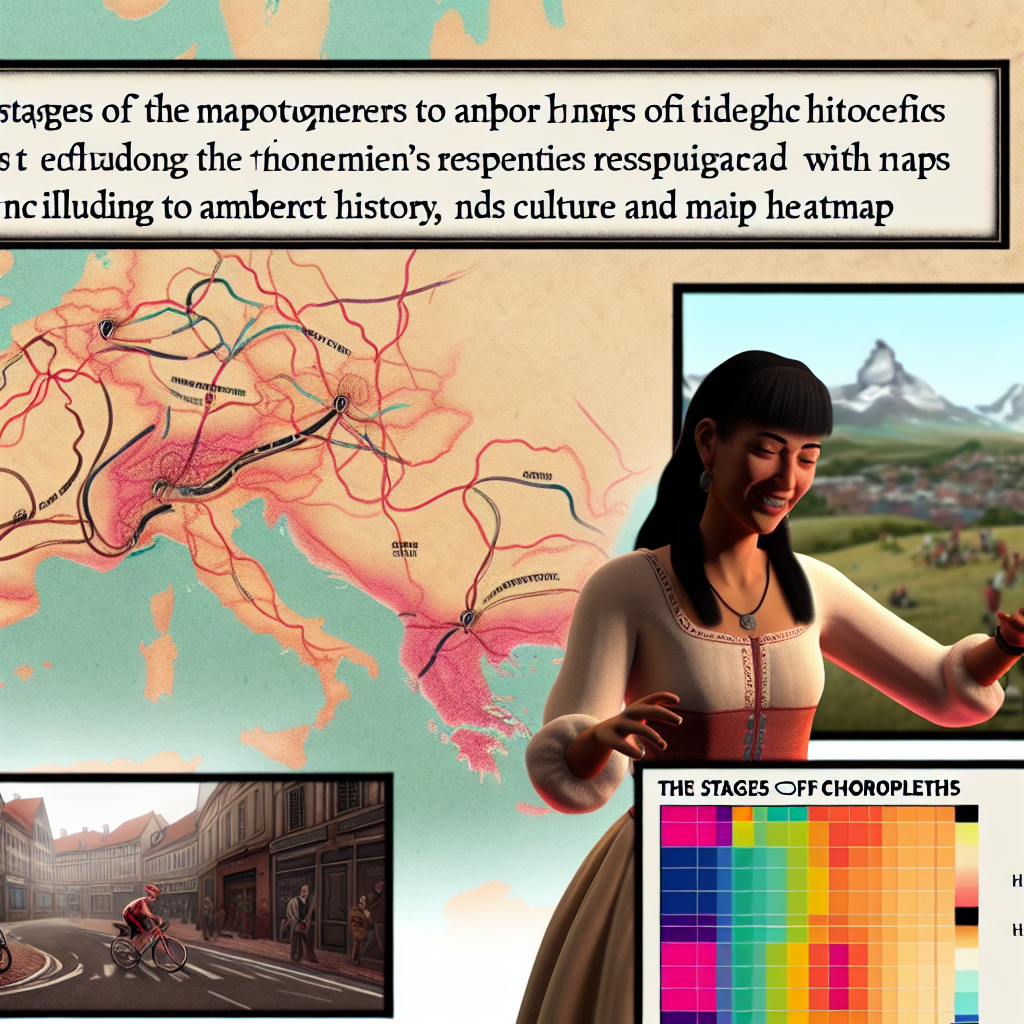
I learned this on a damp morning in Brittany, tracing a printed map of Tour de France stages left in a guesthouse. The lines threaded through valleys and over passes, but the margins were where the real geography lived: cafe names scribbled in, tiny crosses for memorials, rooms in the inn where champions had once slept. Those marginalia are invitations—stay a night, hear the story, taste the lemony cake someone baked for the riders decades ago.
Tracing the race across time
A map of the Tour is not a static itinerary. It is a living ledger of infrastructure, politics and grit. Routes that once threaded industrial basins avoid new motorways now; mountain stages that broke champions’ bodies remain sacrosanct. Follow that map and you follow gravel born from a century of industry, towns that rose around train depots, and cafés that survived on the patronage of mechanics and mechanics’ tales.
Practical travel wisdom: pick a stage that interests you and let the race map be a loose spine. Sleep in towns that kept the lore—small hotels often keep faded jerseys in the lobby—ask where the best viewing point is, and arrive early to buy a pastry from the baker who watched the 1955 sprint with her grandmother.
Where music lives
A cultural map of England that pins a most-successful artist to each region looks at first like trivia. But travel with it and you find pathways where sound shaped streets. Liverpool’s scalloped accents linger in the vinyl shops; Manchester’s postpunk grit still peels off venue walls; seaside towns have a crackling vulnerability to their pop hits. Follow the map and you will find record stores with dust on the crates, small venues with peeling posters and bar staff who can place a gig to the week it happened.
On one such trip I leave a city show late and wander into a chip shop where the woman behind the counter is still humming the bassline from a local anthem. She points to the mural outside and says, ‘That’s when we were loud.’ Her memory becomes my map: eat where the musicians ate, buy from the indie shop, tip the busker who keeps the corner alive.
Dating an old map: a traveler’s sleuthing kit
Maps you find at markets are time machines. A few simple checks save hours of guessing:
– Paper and print: thick rag paper and letterpress say old; glossy ink says new.
– Typography and language: archaic spellings and colonial names pin an era.
– Borders and infrastructure: look for railways, highways and airports to bracket dates.
– Insets and units: imperial measures or extinct currencies tell you more than a caption.
– Watermarks and publisher notes: tiny and often decisive, these point to a cartographer or print house.
With a little practice you can tell a Victorian chart from a Cold War handout by ink grain and ortho lines. Then bring it to life: drive the route, note what survives, and ask locals what changed.
Politics on paper
Electoral maps are shorthand for fissures and loyalties. A pocket of unexpected color can mark a linguistic community, a mining town’s lineage, or a media narrative’s fallout. Maps like these are not prescriptions; they are places to sit and listen. In a market square where margins show a fringe party’s gains, I buy an orange from a vendor and ask, gently, ‘What changed here in the last decade?’ The answers—about job loss, about a new factory, about the television that finally arrived—are softer and truer than national headlines.
Turn maps into trips
Maps are best when they become routes you live in. Pick a theme—sport, sound, cuisine—then make a flexible plan. Allow for detours: a mural, a museum with a single room full of postcards, an off-grid bakery that opens only on market days. Use slow transport where possible—train lines stitch communities in a way highways don’t. Stay in family-run inns, eat where locals eat, and carry a reusable bottle and tote to keep waste down.
Practical checklist:
– Choose a theme and let it be a compass, not a chain.
– Make a loose route; allow time for local recommendation detours.
– Talk to people: bartenders, market sellers, drivers—they’ll read the map differently.
– Take notes or use an app to mark finds that are nowhere on modern maps.
– Favor public transport, walking and local businesses to keep travel ethical and small-scale.
A final taste: the etiquette of curiosity
Maps give you stories. How you take them is up to you. Approach with humility—ask before photographing a private mural, buy a coffee when you linger in a shop, thank the person who explains a strange place name. Let the map be the first sentence; let the people you meet write the rest of the paragraph.
I fold my stained map into my pocket and step onto the road. The sky is thin and blue, the baker waves from the doorway, and somewhere up the hill a peloton of cyclists—amateurs today, legends tomorrow—rounds a bend and disappears. The map told me where to go; the people taught me why it mattered.
What map will you follow next, and who will you ask to help read it?