
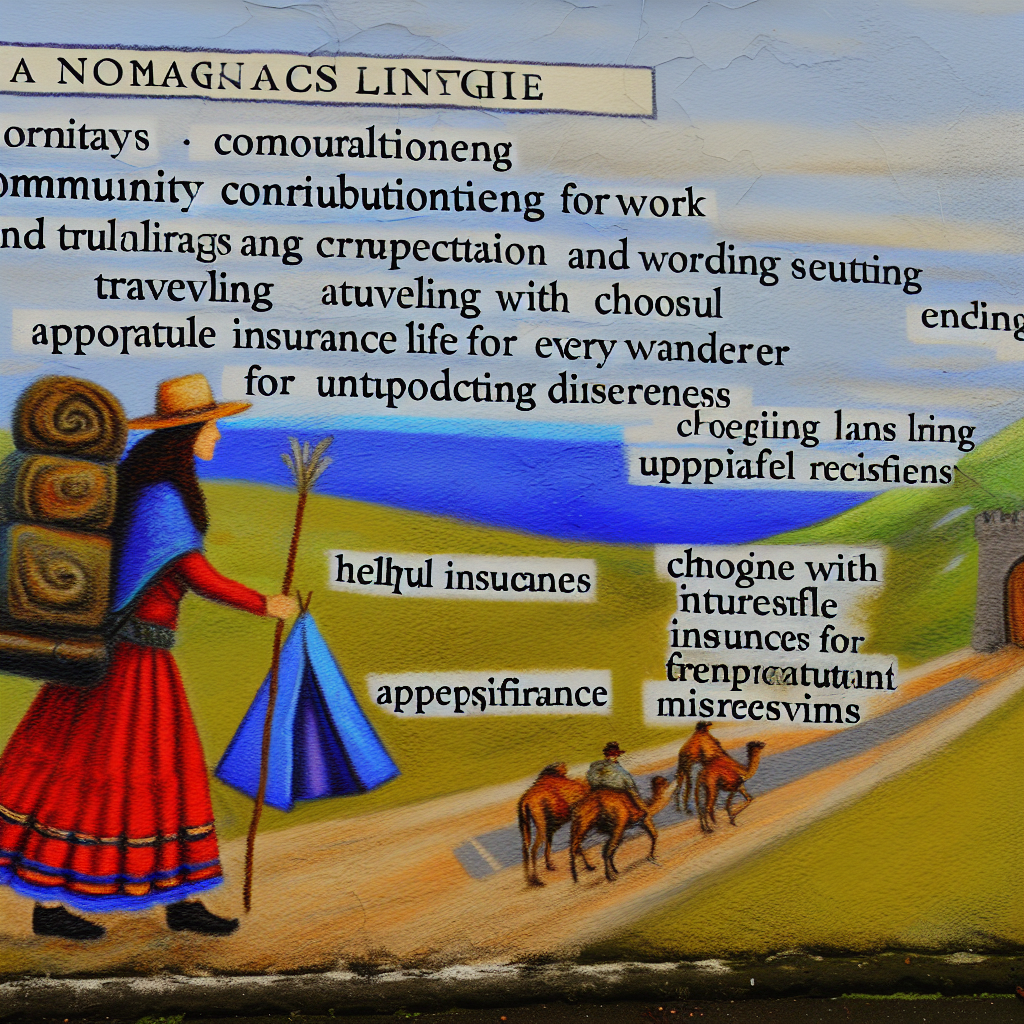
# The Nomad’s Compass: Community, Boundaries and a Backup Plan for Life on the Move
You left a stable desk to trade commutes for sunrises over unfamiliar rooftops and the constant hum of coffee shops. Freedom is intoxicating — until the small-print realities catch up: community rules, cultural blind spots, always-on bosses, and travel plans that fracture mid‑trip. For modern wanderers the journey isn’t just about where you go; it’s about how you plug in, protect yourself, and travel with humility.
This guide stitches together what many of us learn the hard way: how to find and contribute to the nomad commons, how to set work boundaries without burning bridges, how to reckon with your privilege, and how to choose insurance that actually helps when life detours.
## Find your campfire
On a rooftop in Valparaíso, the air tastes of grilled empanadas and diesel, and the city’s color is a bruise of cobalt and rose. A group of remote workers cluster around a battered table: a Dutch designer swapping hostel recommendations, a teacher from Oaxaca sketching a lesson plan, a Brazilian coder debugging with a café cortado at their elbow. Online hubs and local meetups are the beating heart of that scene — communal campfires where tips, warnings, and small victories are traded like kindling.
But communities work best when members bring value instead of noise. Before asking a question, do the legwork: scour pinned threads, read the community guides, and search recent conversations. When you post photos or route notes, add context — exact location, budget, visa details, and practical takeaways. A one-line postcard is fine for Instagram; a community post should be a map and a flashlight.
Pro tip: small gestures matter. Reply to someone who asks for a coworking rec, confirm the visa rules you used last month, and correct misinformation kindly. That keeps the campfire alive.
## Speak the community’s language
Every digital-nomad corner has its etiquette. Moderators are not gatekeepers for gatekeeping’s sake; they guard a fragile ecosystem against spam, predatory gigs, and repetition. If you want to share a product or a blog, include the substance up front and disclose any connection. If a post is removed, reach out privately and ask why — a quick, thoughtful message shows you respect the group.
Use unique phrases when you message mods to prove you read the rules. Don’t post the same question in five threads. If you provide a service, offer real value (free consult, a useful template, or a clear case study) rather than a slide deck and a link. Communities survive when people act like neighbors, not billboards.
## Know your place — and your privilege
Travel changes you; it also sharpens an inventory of the privileges you carry. If your passport opens fewer gates, notice it. If your bank rolls quick medical evacuations or remote work tools, notice that, too. That awareness should lead to humility.
When you arrive in places with fewer resources, listen first. Learn local problem solving instead of assuming you have the better answer. Support businesses where pay is fair and leadership is local. Learn a word or two: in many Andean markets a smile and a ‘buenas’ goes a long way; in Portugal a simple ‘obrigado/obrigada’ is a bridge. Travel is easier when you are a guest, not an expert.
I remember a night in a small fishing village where I tried to explain efficiency methods to the fishermen; the conversation ricocheted and taught me more about patience and rhythm than any productivity podcast ever had.
## Set borders around your bandwidth
The most corrosive myth of remote work is the expectation of perpetual availability. It starts with late-night pings and becomes invisible pressure to always be online. That’s unsustainable.
Begin with clarity. Define core hours in your calendar and publish them where colleagues can see them. Set a status message that reads: ‘Available 10:00–16:00 GMT+1; async updates in Notion by 09:00 my time.’ Use asynchronous tools: recorded updates, shared docs, and a daily summary email can replace urgent Slack pings.
If pressure persists, have a transparent conversation framed around productivity and wellbeing. Different cultures have different rhythms; acknowledge them and negotiate a compromise that protects your focus. Tell stories: talk about the time-zone juggling that caused a missed deliverable and propose a better rhythm. Most teams prefer fewer fires to constant embers.
## Pack a smarter safety net
Travel insurance is the backbone of practical adventure. But ‘nomad-friendly’ branding doesn’t guarantee coverage when disaster actually strikes.
Before you buy, read the trip-interruption, missed-connection, and delay clauses. Does the policy cover rebooked flights, missed trains, or canceled tours? How do they define ‘covered reasons’? Check residency and domicile rules — some insurers accept only certain passports or require a primary residence.
Document everything. Keep receipts, screenshots, booking references, and official notices; insurers base decisions on paperwork. If one provider refuses a claim, consider alternatives: global expat health plans for extended stays, specialized trip-interruption add-ons, or local insurers with better regional understanding. Sometimes a hybrid approach — a base global health plan plus short-term travel policies for trips — is the most practical.
A note on chronic conditions: always confirm long-term coverage before you move. The worst moment is opening a policy after an emergency and finding the condition excluded.
## Practical rituals that keep me sane
– Create a 24-hour ‘go bag’ in cloud form: scanned IDs, an encrypted copy of your passport, a PDF of your primary insurance policy, and local emergency numbers.
– Use local SIMs for regional reliability; keep a global eSIM as a backup for short-term needs.
– Build a roster of local helpers — a trusted host, a reliable taxi driver, a doctor recommended by locals — and keep their contacts in a place you can access offline.
– Practice slow, ethical photography: ask before you shoot, pay if someone performs for a photo, and prioritize human connection over the perfect frame.
## Takeaway
– Join communities thoughtfully: search before posting, add context, and respect the rules.
– Practice cultural humility: notice your privileges and listen to locals.
– Protect your time: set core hours, use async tools, and negotiate norms with your team.
– Vet insurance like a pro: read exclusions, check residency rules, and document everything.
The nomad life isn’t about having zero constraints — it’s about choosing the right ones. Build a supportive circle, guard your boundaries, and carry a safety net that actually catches you. Wander wide, but travel prepared.
As you pack your bag and your calendar for the next trip, what boundaries, rituals, or communities will you choose to carry with you so the journey becomes not just freer, but wiser?