
# Afterlight Atlas — Five Streets That Change the Way You Travel
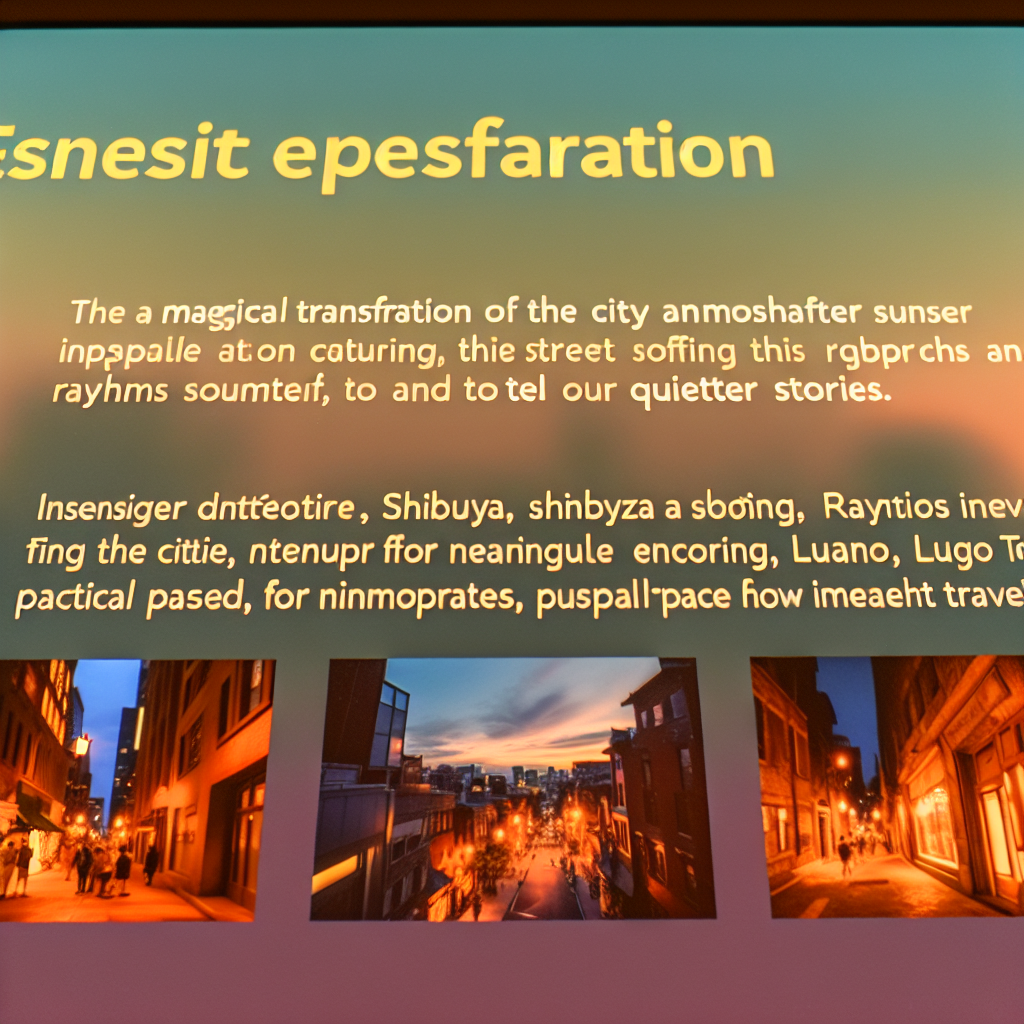
There’s a moment between day and night when a place loosens its performance and offers something quieter, truer. I like to call it the afterlight: the hour when streetlamps bloom, storefronts breathe, and neighborhoods reveal how people actually live. Below are five streets and small neighborhoods that teach me how to travel differently — less ticking boxes, more listening and lingering.
## Old Québec: Rain, Stone, and Warm Lights
I step beneath an umbrella and the city becomes a tableau of steam and stone. The steep streets of Vieux‑Québec glisten like old coins; the Hôtel Frontenac sits like a gold‑lit ship on the bluff. Rain tightens the scent of maple and wood smoke; a vendor’s roasted chestnuts punctuate the air. The cobbles are an invitation to slow my pace and look up: carved stone facades, iron balconies, and the bleed of warm light from a bistro where a radio hums chanson française.
Cultural moment: At dusk I’ll share a table with an elderly couple who insist I try poutine their way — a sharper cheese curds, gravy stewed with local stock. They tell me stories of winter carnivals and neighborhood rites; language slips between French and warm English. These are the exchanges that turn a meal into memory.
Why go: Québec’s European bones and Canadian friendliness create a rare hybrid: historic streets with modern comforts.
Tip: Pack a compact umbrella, shoes with good grip, and consider a guesthouse with a fireplace or spa to warm up after long, damp walks.
—
## Shibuya: Neon Kinetics and After‑Hours Energy
Shibuya at night is organized motion—human choreography set to LED. The scramble crossing pulses in waves; lights cascade from screens like a slow aurora. Yet step into the side alleys and the city changes: slender izakayas glow with paper lanterns, the hiss of yakitori on grills is almost musical, and men and women in inventive streetwear share tiny counter seats like a communal ritual.
Cultural moment: I slide onto a stool at a standing bar where salarymen and creatives rub shoulders. The bartender offers me a tiny dish with grated daikon and a crisp takoyaki. We trade a few polite words — “sumimasen” and “arigatou” — and in that brevity there’s an intimacy. It’s less about conquering Tokyo than acknowledging its codes: quiet on the train, respect in queues, and a readiness to follow local cues.
Why go: For electric contrast — efficient transit means you can spare time to lose yourself productively.
Tip: Carry cash for small places, learn a few polite phrases, and explore backstreets like Nonbei Yokocho for more intimate finds.
—
## Paros: Whitewashed Turns and Slow Golden Hours
Paros is a lesson in pared‑down beauty. The alleys are narrow, whitewashed canvases punctuated by cobalt doors and explosive bougainvillea. Afternoon heat bleeds into a cooler golden hour; chapel bells sound and fishermen mend nets in the harbor. Here, time is measured by tidal rhythms, the arrival of the catch, and the clink of plates at a family taverna.
Cultural moment: At a seaside taverna I sit with a family who offer me a taste of their “meze” spread — grilled octopus, dolmades wrapped with care, and a small glass of raki. Words come slowly; conversation comes easier over shared food. Off‑season, you’ll find unhurried locals happy to explain the ritual of name days (onomastika) and the particular way they press olives for oil.
Why go: Paros offers postcard views without the forced spectacle — an island that rewards curiosity and patience.
Tip: Wear comfortable sandals, bring a light jacket for evenings, and try local spirits like vin santo or raki with meze. Observe rituals like greeting shopkeepers when you enter small businesses.
—
## Lugano: Swiss Precision Meets Mediterranean Mellow
Lugano folds Alpine order into Mediterranean ease. Palm trees fringe the lake; cafés linger with espresso cups and newspapers. The promenade hums with couples and dog walkers; pastel façades reflect on water that takes a little of the city’s light with it. Evenings here lean elegant but approachable: an aperitivo savored over a plate of prosciutto, then a short tram ride uphill for a piazza that hosts live music.
Cultural moment: I’m invited to a neighborhood pasticceria where the owner, a third‑generation baker, shows me how they score focaccia. He explains the slow rise, the local flour, and how the recipe shifts across valleys. In Lugano, refinement is local and tactile — a baker’s wisdom, a lake captain’s joke.
Why go: Compact scale, refined dining, and easy access to viewpoints make Lugano ideal for a relaxed long weekend.
Tip: Use public transit to reach hillside vistas; pick a lakeside café for sunset and order an aperitivo — it’s a civic pleasure here.
—
## Venice: Rooftops, Rooflines, and the Lure of Early Light
Venice is most honest before tourists arrive: mist lifts from canals, market stalls arrange their catch, and the city breathes slowly. From a rooftop I watch a geometry of roofs and canals — a patchwork of terracotta and slate stitched by water. Dawn and dusk are when the city whispers; step into a back calle and you might find a cicchetti bar where locals trade news over small plates and a spritz.
Cultural moment: A morning at the Rialto market is a study in humility: fishmongers call out the day’s haul; an old woman selects herbs with practiced fingers. I buy a few olives and a hunk of pecorino, then sit on a stone quay and listen to the cadence of Venetian voices. Conservation matters here: locals remind me gently about tide lines, boat traffic, and the importance of supporting family‑run osterias.
Why go: Venice rewards patience; its quiet moments are the most transporting.
Tip: Rise early for rooftop views, support small businesses, and walk slowly through sestieri away from crowds.
—
## Cultural Compass and Practical Notes
Across these streets the throughline is simple: seek transitions — that hour when light changes and public life pivots. Practice low‑impact travel: carry a reusable bottle, a foldable market bag, and a compact rain shell. Learn a few local words, respect queues and rituals, and prioritize independent businesses that keep neighborhoods alive.
Sustainable travel isn’t a checklist; it’s a posture. It’s asking before photographing someone, choosing a family taverna over a chain, and asking how to tip or donate in culturally appropriate ways. These small choices keep the places we love intact.
## Takeaway
Streets at the edge of night are teachers: they show how cities shift from performance to intimacy. Move slowly, accept invitations, and let the light do some of the storytelling. Your best stories come from unplanned detours, quiet exchanges, and the feeling of arriving somewhere a little less known.
Where will you go when you decide to follow the afterlight?