# Four Short Escapes to Rekindle Your Travel Fire — Peaks, Plazas, Lagoons and Local Wisdom
By Elena Rodriguez
I arrive at dawn on a road that seems to have been carved for light. The mountains in front of me are not just grey rock but a choir of pale faces that blush salmon and gold as the sun lifts. A goat bells somewhere above, a baker in a valley pulls trays of still-warm pane from an oven, and the scent of espresso rides the cold air. This is travel that invites you to slow your breath and sharpen your senses.
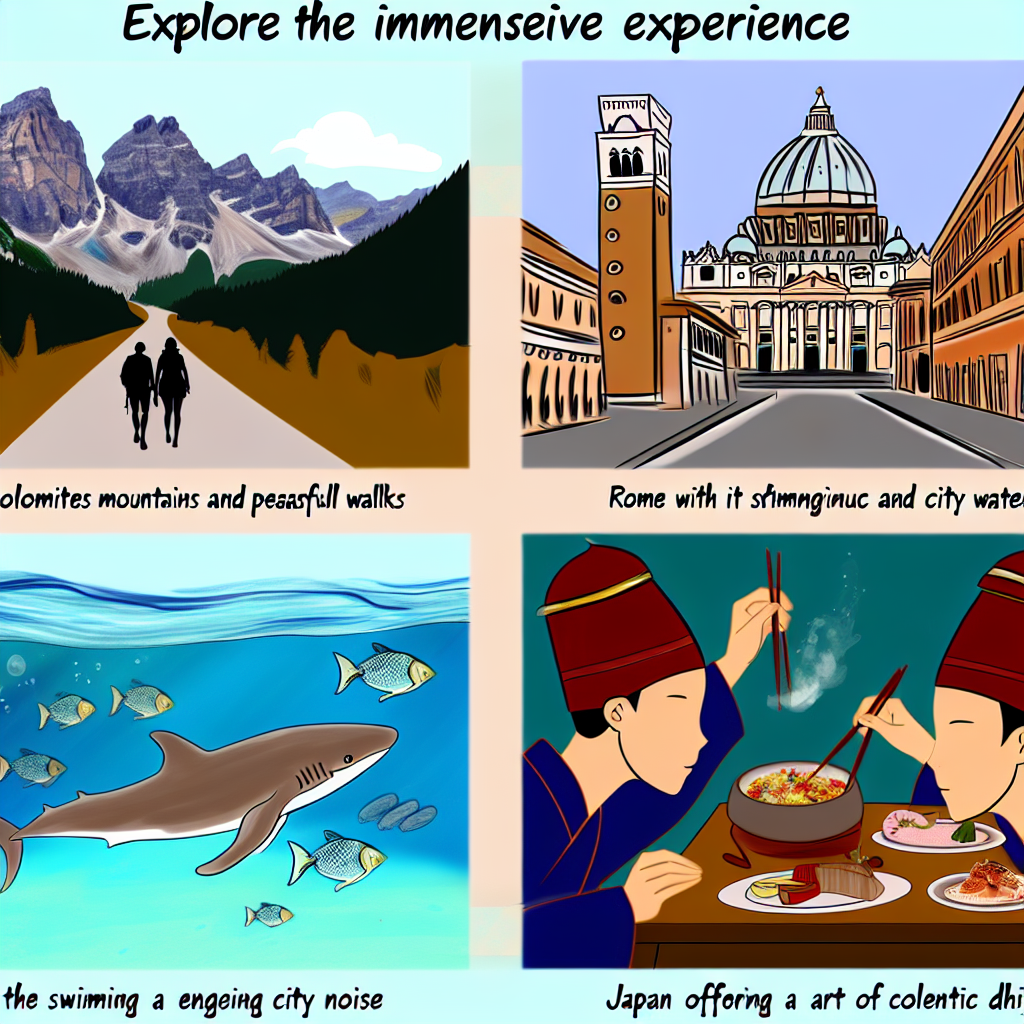
If you’re chasing meaningful time off rather than an Instagram backdrop, choose places that ask you to move, taste and listen. Below are four short escapes — the jagged Dolomites, the timeless hum of Rome, the crystalline Maldives, and the layered sprawl of Japan — each laid out as a sensory snapshot with practical instructions for turning a weekend into a small transformation.
## Dolomites: Drive, hike, and let the road surprise you
Morning light here has a temperature. It slices the limestone into sheer planes and casts long shadows that change the mountains’ mood every half hour. Rent a car from Milan or Verona and give yourself 4–5 days to thread together the best loops. Drive slowly: the road is part of the landscape.
What to feel: the cold bite at dawn on a lakeshore, the give of alpine moss under your fingers, the metallic scent of cable-car cables at a station. Sit with a hot cocoa at an osteria and watch shepherds shepherd their way across stone.
Must-stops: Lago di Braies for an early lakeshore stroll; Gardena Pass for overlooks that require nothing more than an open window; Alpe di Siusi for customizable alpine walks; Seceda by cable car for the jagged skyline; and the emerald flash of Lago di Carezza as a roadside surprise. Note: places like Cadini di Misurina often require advance parking reservations in high season.
Practical wisdom:
– Pack layers — mountain weather flips fast. Include a light down and a waterproof shell.
– Start early to beat the crowds and find parking.
– Download offline maps; signal can be patchy in the valleys.
– Let yourself meander. Some of the best moments are found between the pins on your map.
Sustainable note: stick to marked trails, carry out waste, and favor family-run rifugi (mountain huts) for meals that support local economies.
## Rome: Vespa dust, handmade pasta, and the joy of slow eating
Rome is a city that moves in layers: rubbled antiquity underfoot, espresso steam at the corner, a woman folding fresh pasta in a kitchen that has smelled of tomato and garlic for generations. Three days is enough if you stop trying to see everything and focus on living a few things fully.
How to inhabit it: wake before the heat for a sunrise stroll through the Forum; let a Vespa tour stitch neighborhoods together with a local guide; spend an afternoon learning to make pasta in a small nearby town where the rhythm is quieter and the instruction hands-on.
What to savor: a lunchtime crowd at a trattoria where nonna calls the shots, the salt-edge of a cacio e pepe, gelato that cools the back of your throat on a warm piazza. Learn to say grazie and buongiorno; even small phrases open doors.
Practical wisdom:
– Book a small-group Vespa tour that prioritizes neighborhoods and viewpoints over tourist conveyor-belt stops.
– Take a pasta class outside the main bustle — quieter, more authentic, and you go home with a skill.
– Reserve tickets for major sites but allow unscheduled hours — many of Rome’s best stories arrive when you slow down.
Cultural tip: follow where the Romans go for lunch. The quiet trattoria on a side street often beats the plaza-facing restaurant in both flavor and price.
## Maldives: choose a villa, respect the reef, rediscover calm
Waking up above water changes the geometry of your day. In a water villa the horizon becomes a bedside wall, and the reef’s murmuring is the only agenda. The Maldives is equal parts marine classroom and a place to lose your phone’s franticness.
What to expect: clear reefs dotted with parrotfish and turtles, resorts that encourage slow loops via bikes, and service that is attentive without being intrusive. Many islands host seasonal celebrations — fold into one if it aligns with your stay.
Practical wisdom:
– Bring reef-safe sunscreen and a reusable water bottle.
– Consider a midweek stay to avoid higher weekend traffic.
– Research house reefs: some resorts have spectacular snorkeling right off the deck.
Cultural and sustainable note: respect local customs on inhabited islands — modest dress in villages, ask before photographing people — and support locally owned excursions when possible. Choose operators who prioritize reef protection and responsible anchoring practices.
## Japan: start small, listen first, embrace rhythm
Japan can feel like multiple countries stacked in a single train ride: neon certainty, temple hush, rice terraces like folded paper. If you’re starting, pick a region and move slowly. Listen to community-curated guides and travelers’ oral histories — they surface the etiquette and seasonal cues guidebooks often miss.
What to practice: learn a few phrases — arigatō (thank you), sumimasen (excuse me/sorry), onegaishimasu (please) — carry cash (many small shops are cash-only), and keep your voice low on trains. Observe the queuing, remove shoes where appropriate, and show respect at shrines by bowing and following local rituals.
Practical wisdom:
– Get a regional rail pass if you’ll hop multiple cities: it often saves money and headache.
– Bring a small pack for day hikes; Japanese countryside rewards slow walks.
– Try staying in a minshuku or ryokan for a night: an onsen soak, tatami floors, and a home-cooked breakfast can reframe your sense of daily ritual.
Cultural curiosity: seek conversations over screens — ask shopkeepers about seasonal specialties (kōyō for autumn leaves, hanami for cherry blossoms) and let those small talks shape your route.
## Keep it real: prioritize human stories
The best travel advice comes from people who have actually been — the barista who knows a shortcut, the diver who points out a shy turtle, the pasta maker who hands you dough and a story. Online lists are useful, but prioritize firsthand accounts and time with locals. Those sparks turn itineraries into memories.
Takeaway: choose depth over checklist. Commit to one escape and live it: drive slow through the Dolomites, learn to shape dough outside Rome, drift above a Maldivian reef, or spend time listening in Japan. Travel that lasts beyond the camera is travel that changes how you see your next walk down the street at home.
Which of these short escapes calls to you — and what small ritual would you bring back to your everyday life?