
# The One-Bag Compass: How to Choose, Pack, and Trade Gear for Long, Light Journeys
There is a dawn in Lisbon where the tram bell rings like a reminder and the air tastes of sea salt and roasted coffee. I shoulder a bag that carries three weeks of life, step into a cobbled alley, and feel the particular clarity that comes from carrying less: my decisions are sharper, my routes more flexible, and the city seems to reveal itself in corners I would have skipped with a hulking suitcase.
One-bag travel is part practicality, part philosophy. It demands we choose, prune, and prioritize. For millennial and Gen‑X travelers who prefer alleyway cafés, hostel conversations that stretch into madrugada, and drifting hotel-to-hotel, this is a compass — practical, travel-tested, and tuned to curiosity.
## Start with purpose: ask the right questions
Before you chase specs and slick marketing, sketch how you actually travel. The clarity of a short list saves hours of comparison shopping and buyer’s remorse.
– Where will you go? A week of tram-and-café days in Europa needs different access than a month of night buses and jungle trails in the tropics.
– How do you sleep and move? Hostels with lockers, boutique hotels with elevators, couchsurfing in labyrinthine barrios — each changes useful bag features.
– What’s in your carry-on life? Are you hauling camera gear, a laptop for remote work, or a minimalist wardrobe that launders frequently? Capacity and organization follow use.
– What’s your comfort threshold? Not all bodies fit all frames. Hip belts, adjustable back lengths, sternum straps, and breathable panels are more than specs; they are what keeps you smiling after eight hours with a pack.
– Budget bracket: set a range. There are solid options under $150, crowd-pleasers around $200–300, and premium designs that justify their price for specific needs.
When you post questions in forums or ask retail staff, include these details — you’ll get answers that actually help.
## Where to look, and what to test
The market is scattered: manufacturer pages, outdoor retailers, and passionate travel communities. Start with comparison lists, then test in person when you can.
– Load the bag with weight similar to what you intend to carry. Comfort with weight is a feeling you can’t glean from spec sheets.
– Test access: panel loaders let you see everything at once; top-loaders are often simpler and lighter. Which suits your rhythm when arriving at a late-night guesthouse?
– Look for padding and ventilation. A sweaty back after a city walk is a daily misery you can avoid.
– Hidden pockets are useful if you will use them. Extra zippers equal weight and potential failure points; prefer function over novelty.
New releases matter, but watch marketing. If a brand swaps to lighter nylon or reorganizes a compartment, ask whether daily usability improved. Talk with owners about real-world abrasion, rain resistance, and how materials hold up against hostel bunks and taxi seats.
## Buy, sell, swap: safety and etiquette
Secondhand gear keeps one-bag travel sustainable and often helps you score discontinued favorites. But approach exchanges like any other personal transaction: cautiously and politely.
– Ask for a dated photo of the actual item with the seller’s username. It sounds small, but it stops many scams.
– Keep initial negotiations public on forum threads if possible. That way the conversation has witnesses.
– Use payment methods with buyer protection. Avoid friends-and-family transfers that remove recourse.
– Check usernames and transaction histories quickly online.
If you’re selling, be honest about wear, include dimensions, and set a fair price. Clear photos and responsiveness move things faster — traders who list condition and location honestly usually find quick buyers.
A story: in a hostel courtyard in Oaxaca, I swapped a lightweight down jacket for a hand-drawn map and a promise of coffee with the mapmaker. The jacket had kept me warm in windy ferry terminals; the map sent me down alleys where market vendors still call out in Zapotec. Trades can become cultural exchanges when done with respect.
## Packing like a local: setups and habits I actually use
One-bag travel thrives on idiosyncrasy. Learn from setups, then prune ruthlessly.
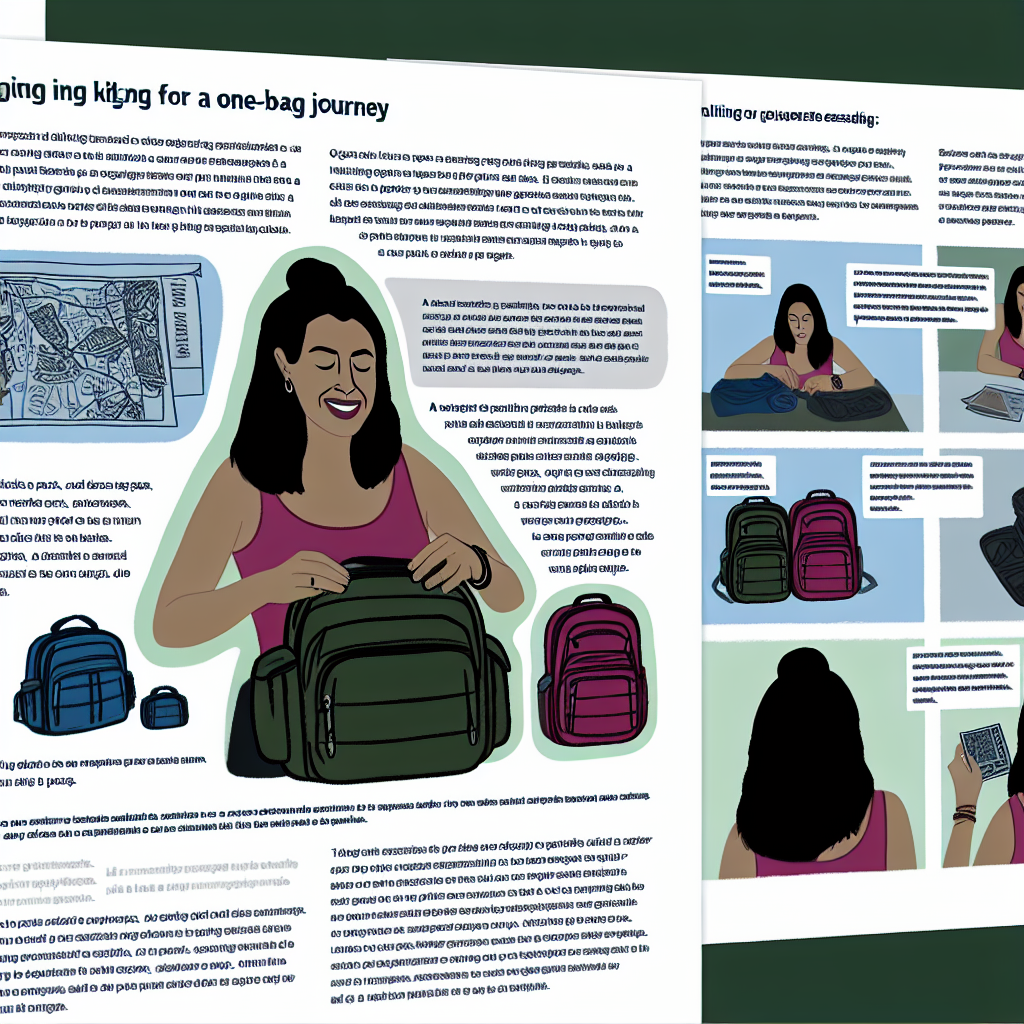
– Packing cubes are your best friend: a large cube for shirts and trousers, a medium for activewear, a small one for intimates and toiletries.
– Tech separation: a slim sleeve for laptop or tablet, a small pouch for chargers and batteries, and an everyday pouch for passport, cards, and a tidy wallet you can hand to a café waiter or tuck into a locker.
– Creature comforts matter: a sleep liner, silicone earplugs, a microfiber towel, and a small notebook. They weigh little and make new beds feel like yours.
– Ritual and scent: a small spritz of familiar cologne, a woven scarf, or a tiny incense cone can anchor a place to memory and calm jet-lagged nerves.
– Personalize without bulking: a leather key fob, a favorite beanie, a compact reusable bottle. They make you feel human without crowding the pack.
Every item must earn its space. If juggling balls or a paperback matter to your joy, keep them. One-bag travel is about living in your style, not someone else’s checklist.
## Field-check new gear: what to ask other travelers
When sizing up a fresh release, ask owners practical questions:
– Does the laptop compartment let you pull out your device while standing in a café line?
– Does lighter material equal more scuffs and tears, or did the brand shore up stress points?
– What annoyances appear after a month — zipper binds, strap chafe, weak buckles? Those small failures become big inconveniences on the road.
Real travelers report what specs do not: the difference between a bag that feels comfortable after 12 hours of transit and one that leaves you rearranging straps every hour.
## Takeaway: less as a gateway to more
One-bag travel forces decisions but rewards presence. It translates cobbled mornings and rooftop sunsets into stories rather than luggage logistics. Trade gear with care, choose a bag that suits your routes and body, and pack with intention. Keep things sustainable: support local repair shops, buy used when practical, and favor items that can be repaired rather than tossed.
When I step off a morning tram in a foreign city with a light pack, coffee steam in the air and a map that remembers the routes of those who’ve lived there, travel changes from ticking boxes to conversation. What will you carry on your next road less wandered, and which weight are you ready to set down so you can notice more?