
# Flight Savvy: How to Stay Comfortable, Save Money, and Make Smart Choices at 30, 40—and Beyond
There’s a particular cadence to a departing terminal: espresso steam, the soft click of rolling suitcases, a child counting the minutes on a gate clock. I stand by a window, winter light flattening the runway into a sheet of silver, and feel both the fizz of anticipation and the low throb of travel fatigue already settling in my shoulders. Airports make us equal parts giddy and weary—the promise of a new coast wrapped in the reality of cramped seats and stiff elbows.
Over the years I’ve learned to treat flights like the first act of a trip: set the tone for how I’ll arrive. The choices we make about cabin class, comfort gear, and booking methods determine whether we step off the plane ready to walk cobblestones or in need of a long, reconciliatory nap. Below are practical, sensory-driven rules I use on the road—and the small, sustainable decisions that help keep trips rich and respectful.
## Choose your splurge by the clock
Ask two questions before you upgrade: when does the plane leave, and what do you plan to do when you land?
– Overnight long-haul and sleep is mission-critical: splurge. A lie-flat seat is not vanity—it’s arrival dignity. On a red-eye to Lisbon I fell into a deep, horizontal sleep and woke to pastel skies over the Tagus; I had the kind of energy that turned a first afternoon into a long, joyously aimless promenade.
– Daytime return flights: think twice. If you’ll be sightseeing that same evening, a full business upgrade outbound may be overkill. Premium economy can be a good halfway point—if it actually delivers. Don’t buy the label; buy the numbers.
Premium economy is a product, not a promise. Before you pay extra, check:
– Seat pitch (legroom in inches)
– True recline (degrees or the visual seat profile)
– Seat width and armrest design
– Presence of a footrest or adjustable ottoman
A “premium” seat that only adds two inches of pitch and a shallow recline is often a placebo. Spend instead on a true upgrade for overnight flights, or save for local experiences that fund memories—an extra night in a neighborhood guesthouse, a guided food walk, or a hands-on class in a local craft.
Practical decision flow:
– Overnight long-haul and you can afford it: consider business for the outbound sleep.
– Daytime return: consider premium economy only if the carrier’s product is demonstrably better; otherwise, book extra-legroom seats in economy or buy a single-seat upgrade.
– Honeymoon or special trip: weigh the memory of the flight against what that money could buy at your destination—a boat *puesta de sol* or a private market tour with a local cook.
## Lighten your seat-soreness toolkit
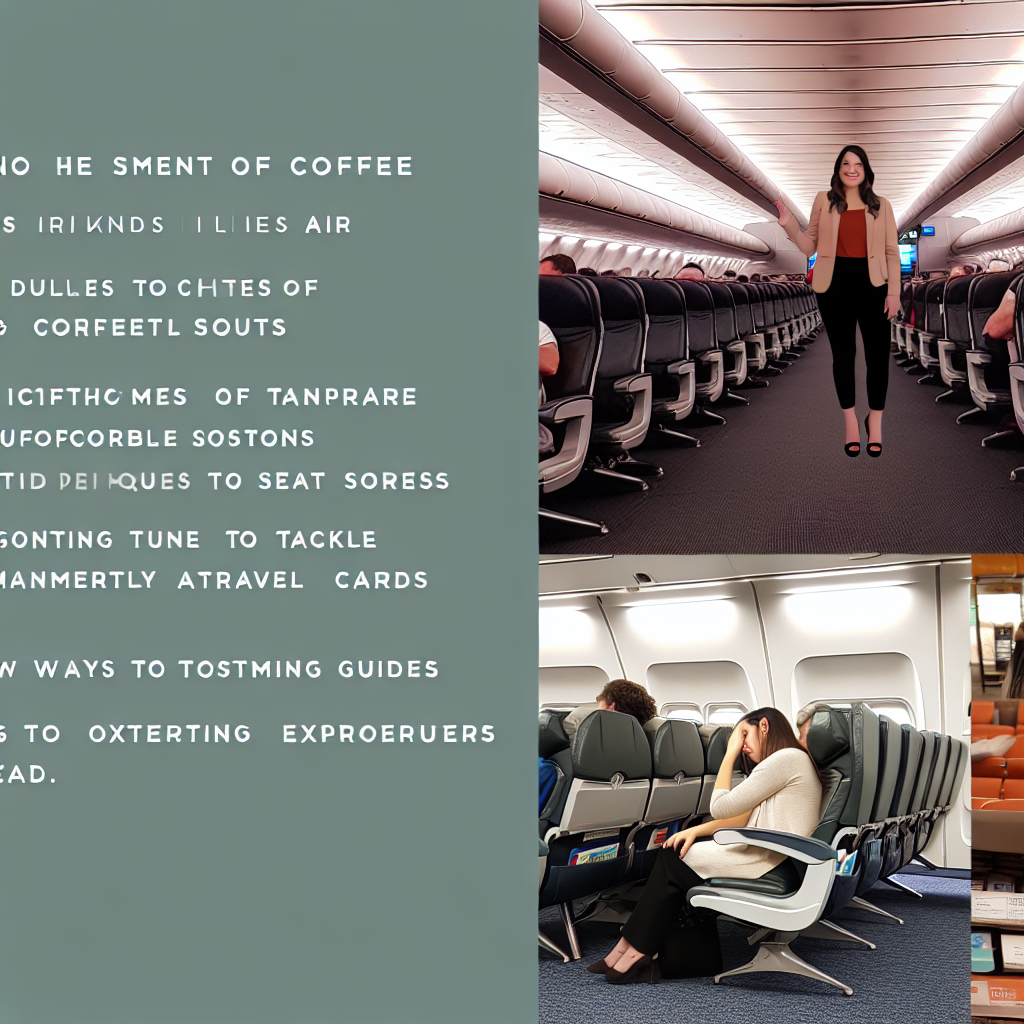
Air travel ages us all—tails complain, discs make their presence known, and elbows go numb. Pack a small kit that fits in a carry-on and a story you can repeat when someone asks how you make it through long hops.
– Coccyx-friendly cushion: a wedge or U-shaped memory foam cushion with a tailbone cut-out protects the sacrum on three- to six-hour flights. Inflatable cushions save space but sometimes lose shape; dense foam keeps its dignity.
– Lumbar roll: a small lumbar pillow or compressible travel roll keeps your lower back aligned; it’s the difference between walking into a city and hobbling into a café.
– Armrest padding: a folded scarf, a soft jacket, or a gel sleeve keeps elbows from scraping on hard plastic. Simple, humble, effective.
– Movement and micro-stretches: stand and walk when allowed. In your seat do ankle circles, seated twists, and shoulder rolls—tiny motions that feed circulation and fend off stiffness.
These are modest investments that let you arrive curious and able to soak in local rhythms—whether that’s a Venetian *aperitivo* or a slow market morning in Oaxaca.
## Rewards cards vs. booking sites: what works for the occasional traveler
If your family vacations add up to $3–6K a year, you don’t need to live in airline lounges to see benefits. Be strategic instead of obsessive.
– Choose points flexibility: cards that earn transferable points let you move value between airlines and hotels when availability shifts. That agility matters more than a fixed-miles tally.
– Look for built-in protections: trip delay/cancellation coverage, baggage insurance, and rental car collision coverage can save you real money and frustration.
– Annual fees vs. perks: if you travel intermittently, a no-fee card with strong travel-category rewards can beat a high-fee premium card unless you’re certain you’ll use its perks.
Use OTAs (Expedia, etc.) as a baseline tool: they’re useful for package deals and quick comparisons. But always cross-check direct fares on the airline’s site—booking direct can preserve loyalty perks, flexible rebooking, and better customer service in disruptions.
My practical combo for occasional travelers: one flexible travel card (no churning necessary), vigilant price-checking across OTAs and direct sites, and a habit of saving screenshots and confirmation emails.
## Before you click cancel
Fare rules are these modern small-print rituals. Airlines often publish a cancellation window—sometimes up to an hour before departure—but the mechanics vary. If a form is required, submit it before the cutoff. If you’ve checked in, cancellation isn’t necessarily blocked, but it can complicate refunds, taxes, or the release of award inventory.
If in doubt, call. Be polite, precise, and keep screenshots. Those emails and time-stamped pages are your receipts in case you need to dispute a charge or reclaim time.
## A culturally-aware closing thought
Travel isn’t a race to tick boxes—it’s how we spend the limited currency of our time. The same money that buys a business-class pod might fund a sunset sail in Lisbon, a *sobremesa* that stretches into language practice with a host family, or chef-led tasting in a neighbourhood cocina. When we align flight comfort with an ethical, local-first mindset—choosing hosts who steward community, experiences that benefit small businesses, and choices that reduce waste—we amplify the return on our travel spend.
On a humid morning in Cartagena I watched a fisherman mend his net while an older woman sold arepas from a weathered stall—simple, human transactions that lodged in my memory far more than any plush seat ever could. The smartest choice is the one that lets you arrive present and ready, whether that’s fully reclined or fortified with a trusty cushion and a plan to sleep well once you touch ground.
Takeaway: match your comfort investments to the flight purpose and timing. Use small gear—coccyx cushions, armrest padding, lumbar support—to tame the physical toll. Compare premium economy by product, not by name. For occasional family vacations, a flexible travel card plus OTA price-checking usually beats blind loyalty. And always read fare rules before canceling: the clock and the form matter.
What flight choice has shaped your best arrival—and what would you rather spend that upgrade on at your next destination?